Architect: Cracknell + Lonergan
Builder: Peter Lucas
Location: Castlecrag, NSW
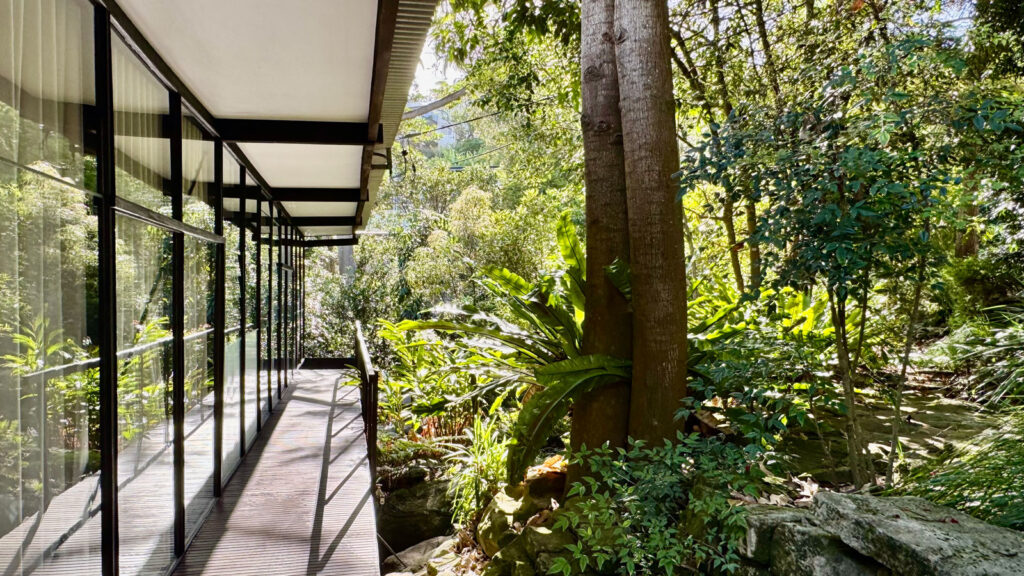
Positioned within the steep bushland of North Sydney, the Glasshouse at Castlecrag is an essential piece of Australia’s mid-century architectural heritage. Designed by Bill Lucas and completed around 1957, this State Heritage-listed residence is a defining example of post-war structural experimentation. Partridge was recently engaged to perform a comprehensive structural condition assessment of the home, which is noted for its dramatic relationship with the steep, bushland terrain of North Sydney.
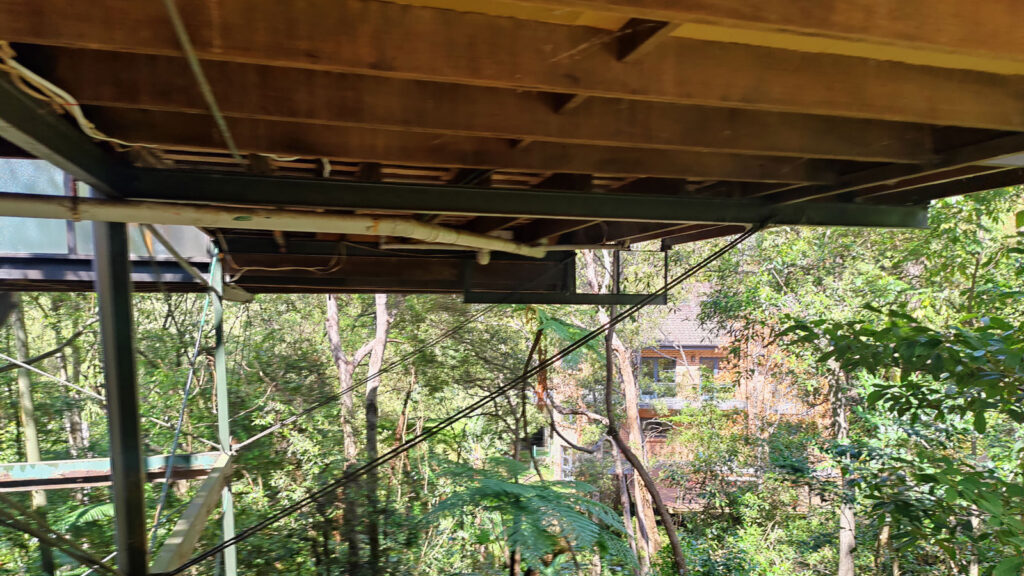
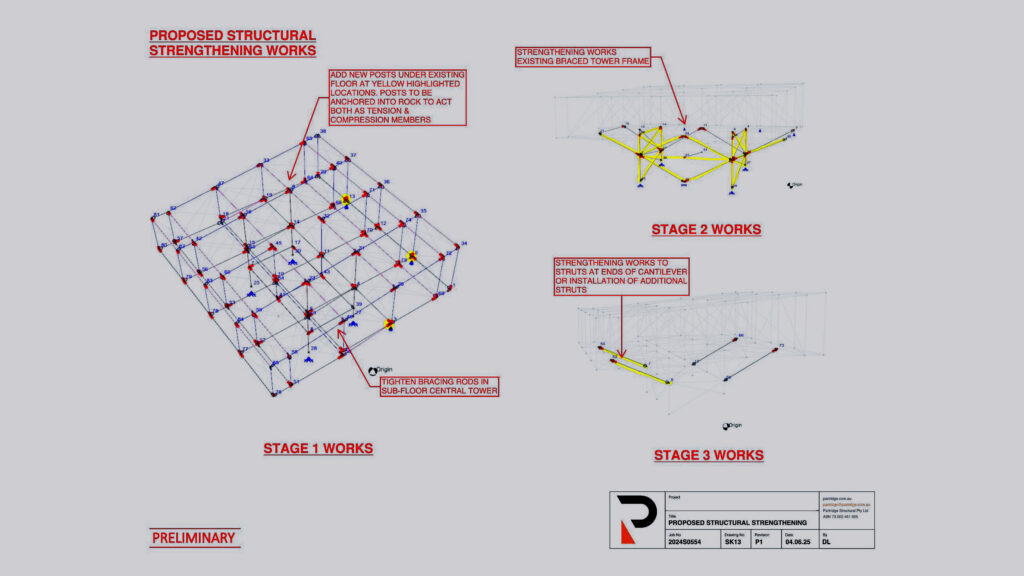
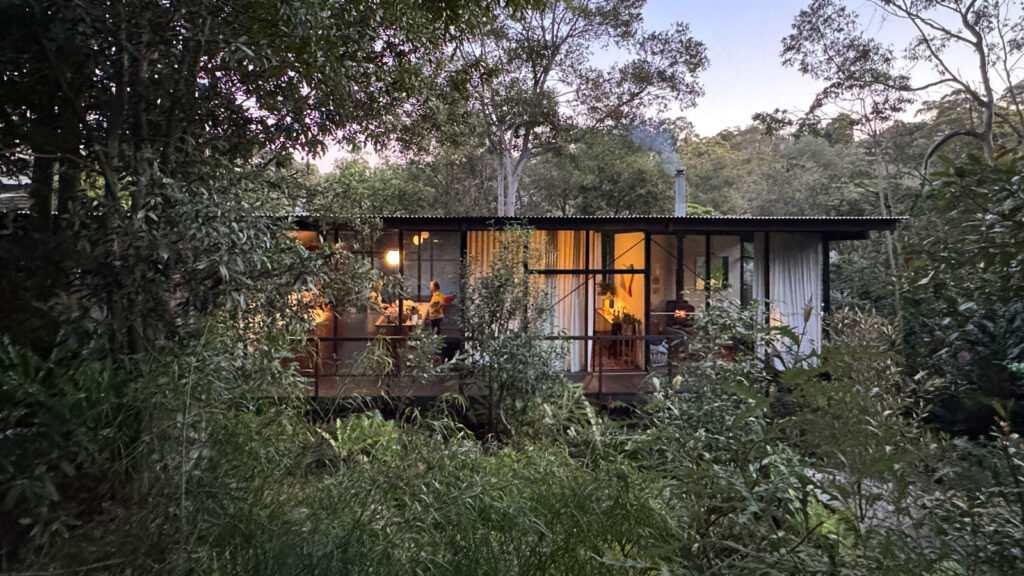
The original design used a regular grid system whereby four bays of timber rafters and floor joists are supported by hybrid steel and timber trusses. This entire assembly relies on a central, braced steel frame core anchored into the sloping rock face. From this core, the hybrid steel and timber trusses cantilever approximately 3.7 metres in two directions. This engineering approach creates the distinct visual impression of a building floating within the treetop canopy, detached from the rugged landscape below.
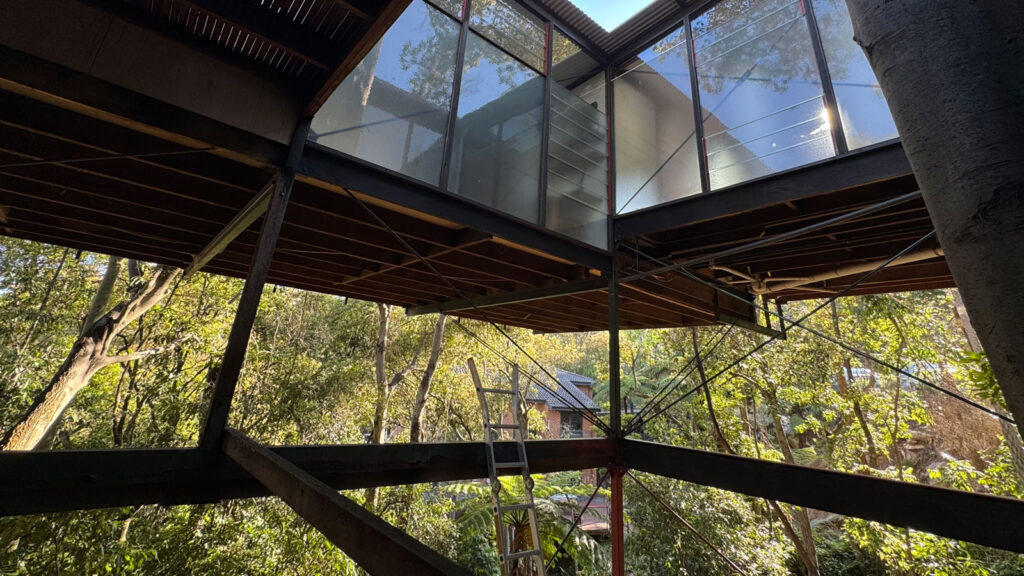
To evaluate the integrity of such a slender and unconventional frame, our team developed a complete structural model using Spacegass. This allowed for a rigorous analysis of the building’s performance under dead, imposed, and wind loads. The modelling provided the technical clarity necessary to bridge the gap between the original 1950s design intent and modern requirements for structural robustness and vibration performance.
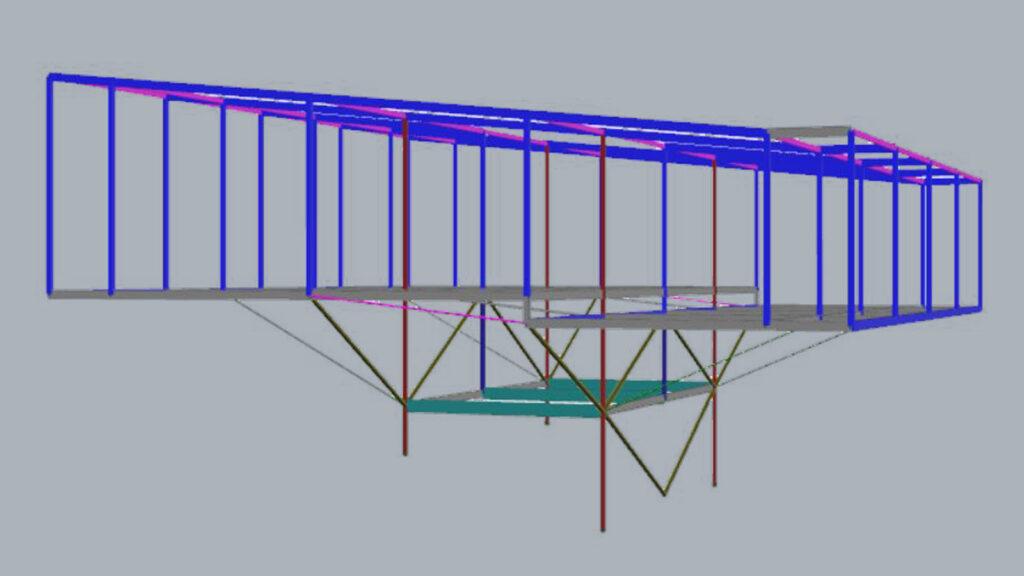
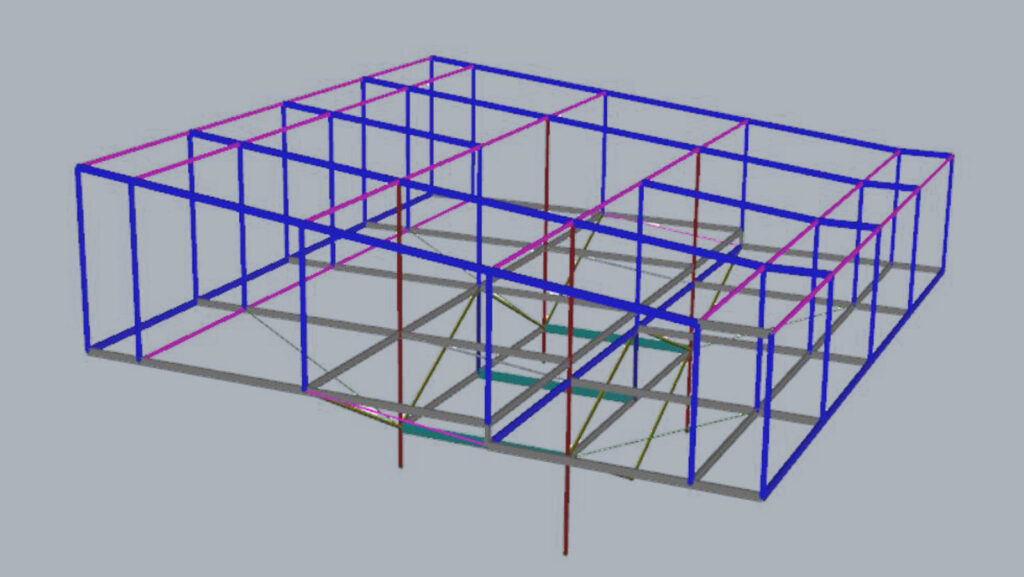
Following the analysis, we collaborated with the client, the builder, and the heritage architects at Cracknell + Lonergan to determine a path forward. The objective was to increase the factor of safety without compromising the architectural purity of Lucas’s work. The resulting strengthening scheme involved the strategic placement of three discrete steel posts beneath the house. These were anchored into the rock on the upper portion of the slope, positioned specifically under each of the primary hybrid trusses.


By concentrating the intervention beneath the floor level, the project team avoided any intrusive works within the living spaces of the home. By also isolating the additional supports to the uphill portion of the undercroft of the house they provide essential stability while preserving the original aesthetic of the cantilevers. The strategic placement of these posts also resolved specific serviceability issues by dampening floor vibrations caused by the lightweight nature of the original design.
https://architectureau.com/articles/Revisited-Glass-House-by-Bill-and-Ruth-Lucas