“Stairs are your teacher; they teach you to be stronger… and every time life puts some stairs before you, accept them as a present,” wrote the Turkish playwright and philosopher Mehmet Murat Ildan. For structural engineers, the sentiment resonates in a different way. Designing stairs presents constant opportunities to learn, to resolve complex structural challenges, and to express structure in a visible and engaging way.
For more than forty years, Partridge has been involved in the design of structural stairs across a wide range of architectural projects. Each new stair brings its own challenges and opportunities, and we continue to be impressed by the creativity designers bring to what is, at its simplest, the task of overcoming a change in level.
Structural stair design must satisfy several fundamental requirements. The structure must provide adequate strength, remain stiff enough to avoid excessive deflection or uncomfortable vibration under foot traffic, safely support balustrades and handrails, and avoid imposing excessive loads on the surrounding structure. Durability and ease of maintenance are also important considerations. These requirements are guided by standards such as AS/NZS 1170.1 Structural Design Actions – Part 1: Permanent, Imposed and Other Actions for loading and the National Construction Code of Australia for dimensional and balustrade provisions.
While many stair forms are inherently efficient and structurally straightforward, more adventurous designs demand deeper analysis and careful attention to connections, restraints and fixings. In this feature we explore several stair projects where Partridge developed structural solutions that support the architectural intent while meeting these performance requirements. Together these projects demonstrate how structural design plays a key role in enabling complex stair forms. Through analysis, detailing and close collaboration with architects and fabricators, Partridge helps translate ambitious stair designs into practical and reliable structures.
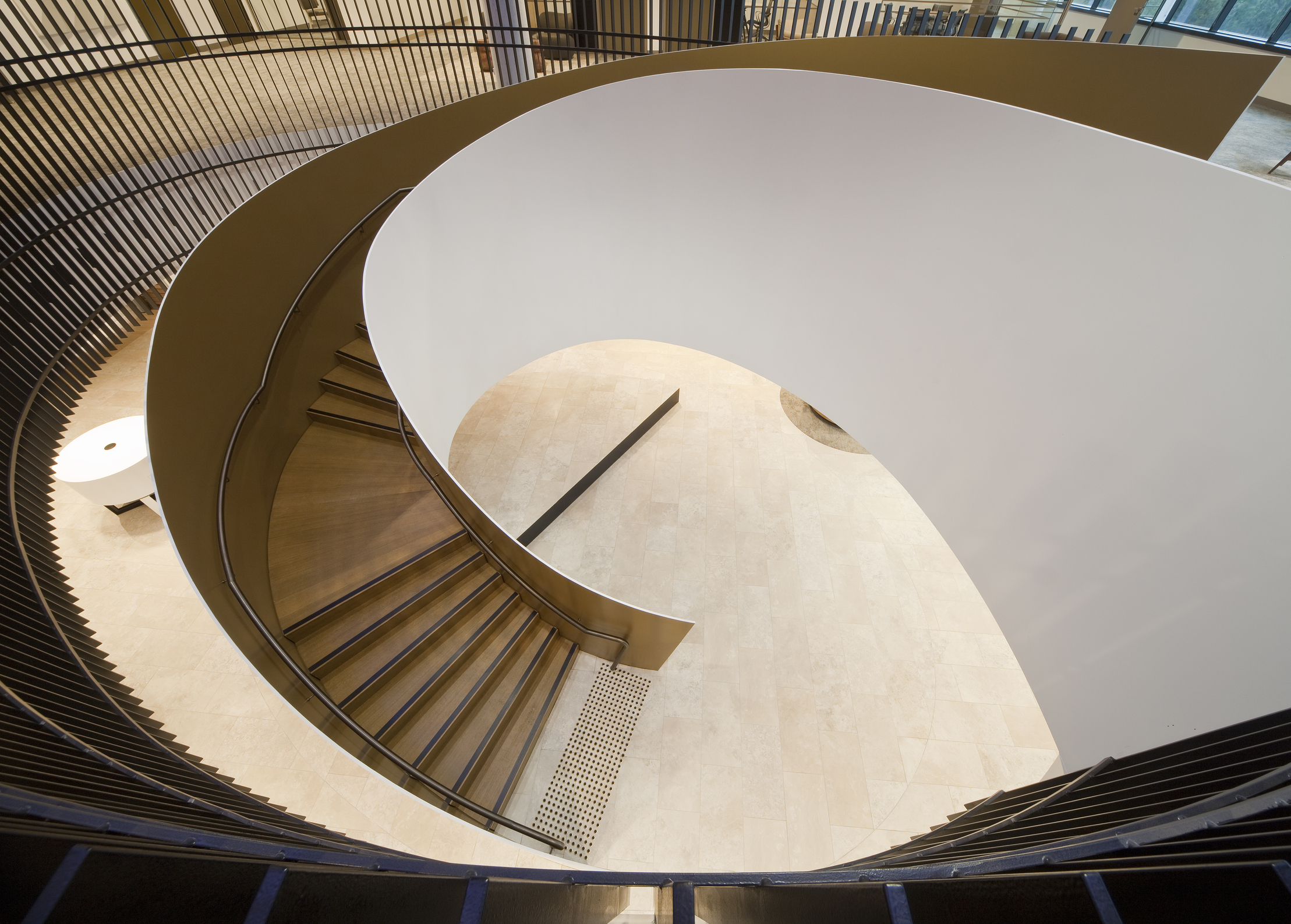
The Samsung offices at Sydney Olympic Park, required a free-spanning spiral stair without intermediate supports. The slender profile of thin curved steel plate balustrades fully engaged by welding to stair treads and risers created a stiff structural form which was refined through Finite Element modelling. Harmonic analysis confirmed acceptable vibrations for user comfort under different loading conditions.
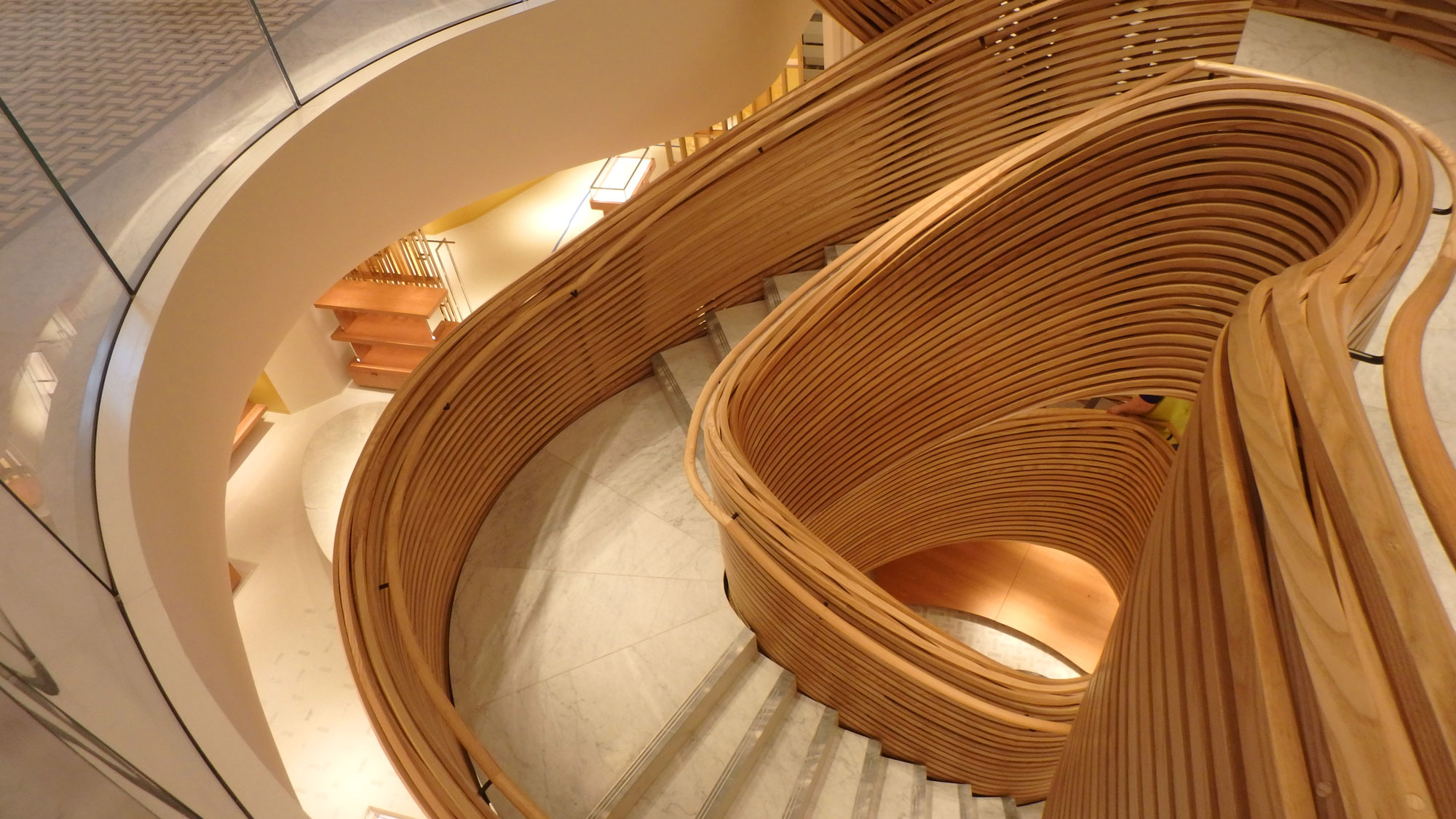
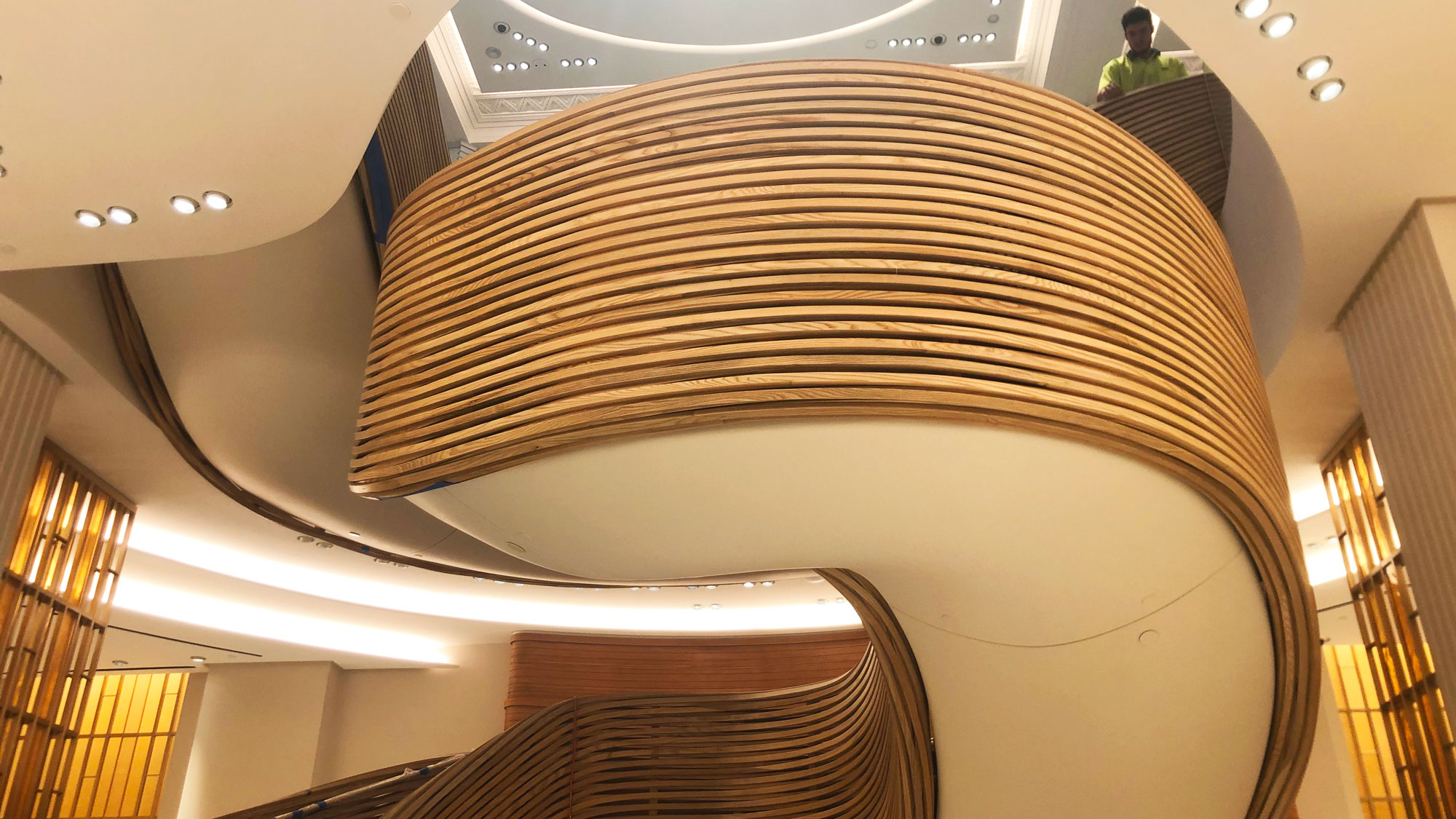
Another strong example is the floating ‘Y-shaped’ stair within a Designer Store in Sydney, by Interni Interior Architecture, (pictured above). The sculptural stair was developed within the constraints of an existing building and constructed as part of a live fit-out project. The design required a self-supporting helical steel stair spanning the height of two equivalent storeys before separating into two independent flights at the upper transition. A lightweight bespoke torsion resisting steel box frame was necessary to prevent overloading the original floors of the building. A key design consideration, therefore, required the use of ‘vibration dampers’ to ensure an acceptable dynamic response under foot traffic-a particular concern with ‘Y-Form’ stairs. The structure was later wrapped in lathed timber battens and finished with marble treads. The project received the Award for Excellence in Structural Engineering – Unusual Projects from the Association of Consulting Structural Engineers NSW.
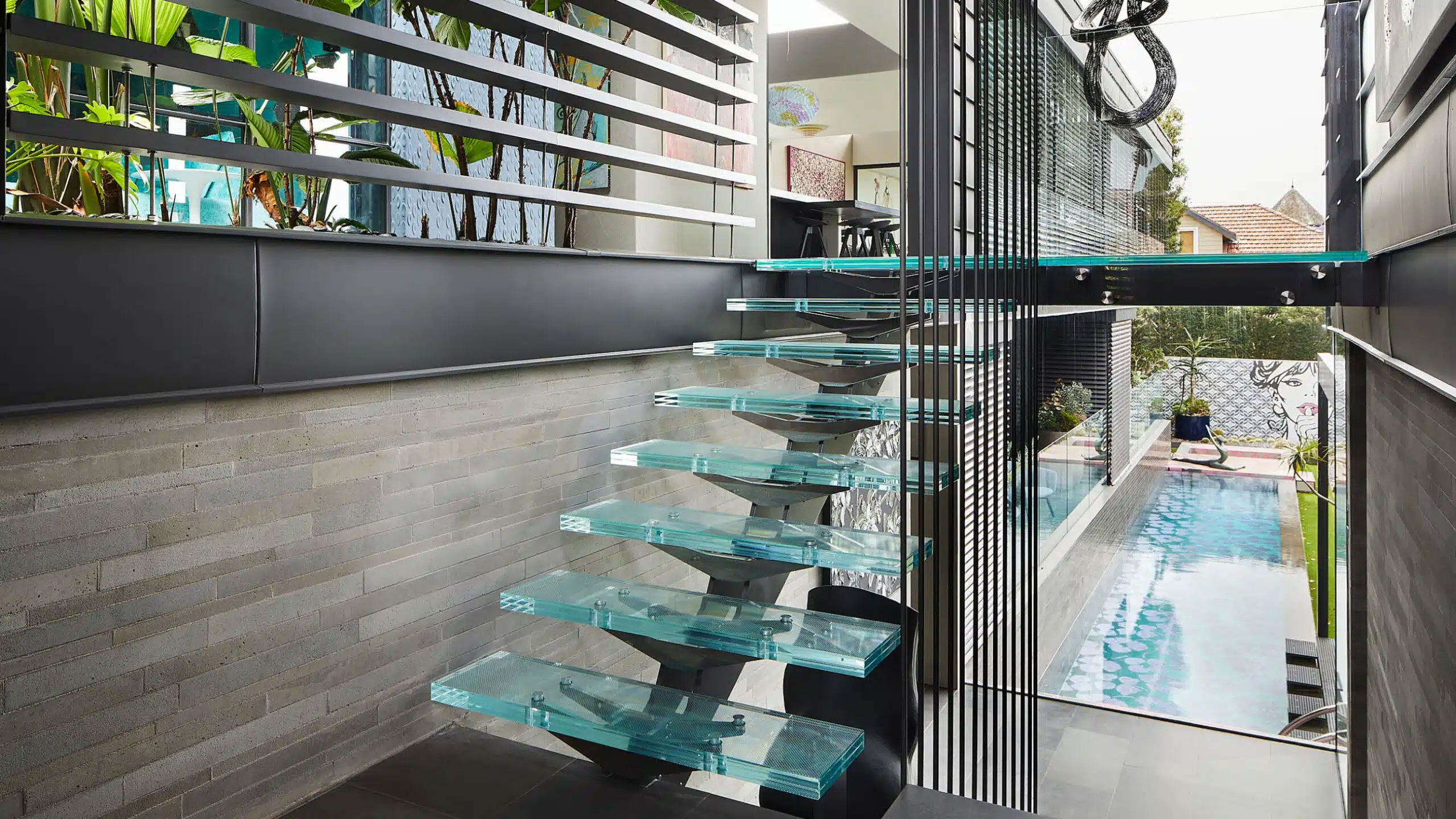
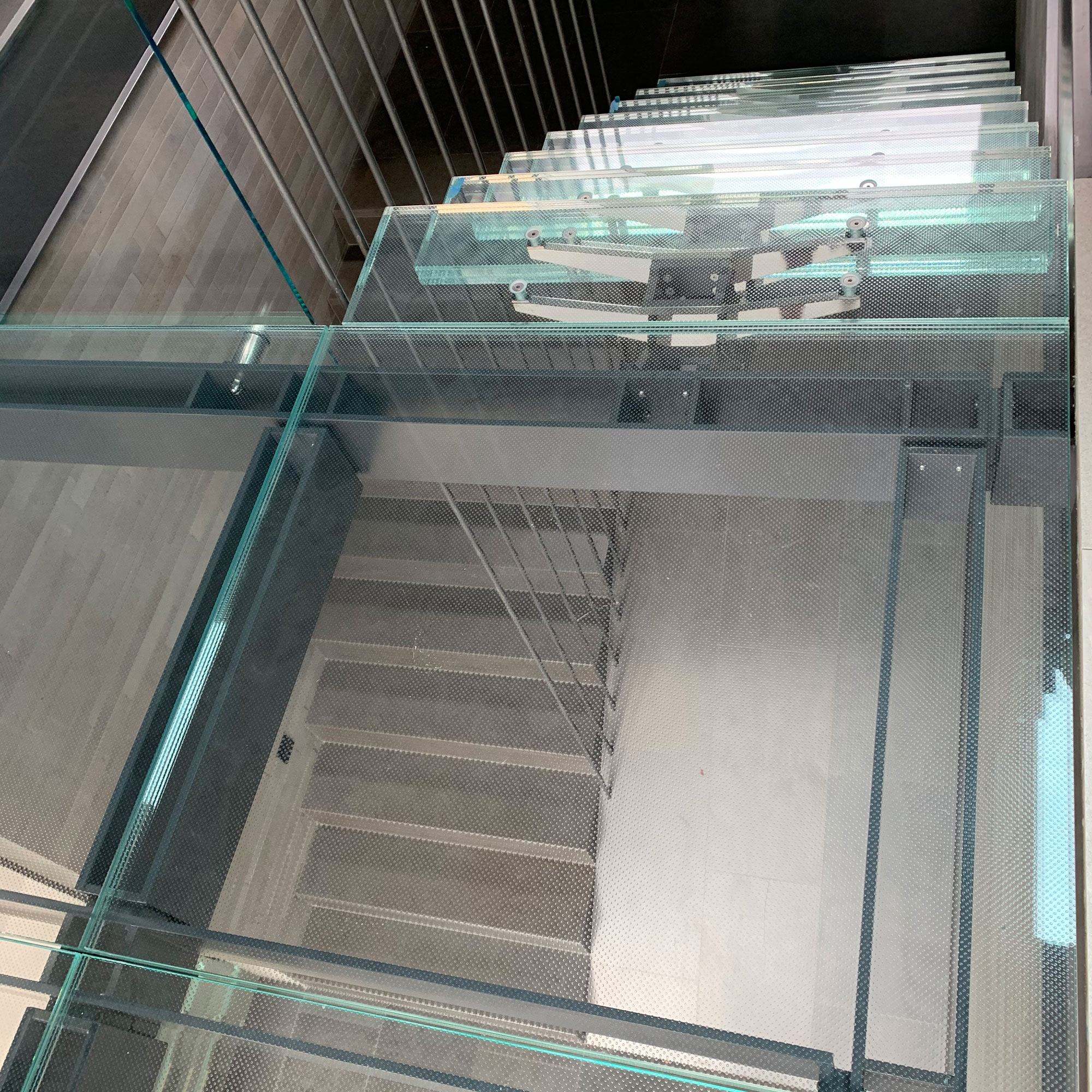
In collaboration with Tilt Industrial Design the brief was to develop a ‘transparent’ bespoke glass staircase (pictured above) which allows natural light to pass through to illuminate the levels below. The final stair flight form has two vertical plate stringers (mm apart to resist torsion) with stainless steel outriggers supporting triple-laminated cantilevered laminated glass treads. The countersunk stainless-steel bolts are recessed into the top ‘tension’ glass ply requiring high-resolution finite element analysis to ensure against overstressing the glass treads. Glass landings are supported on a grillage of shallow stainless-steel supports. Tilt required that all the steel-to-steel connections and the end fixing to the existing building structure (designed to resist the torsional moments) were finessed to retain the clarity and sculptural quality of their design.
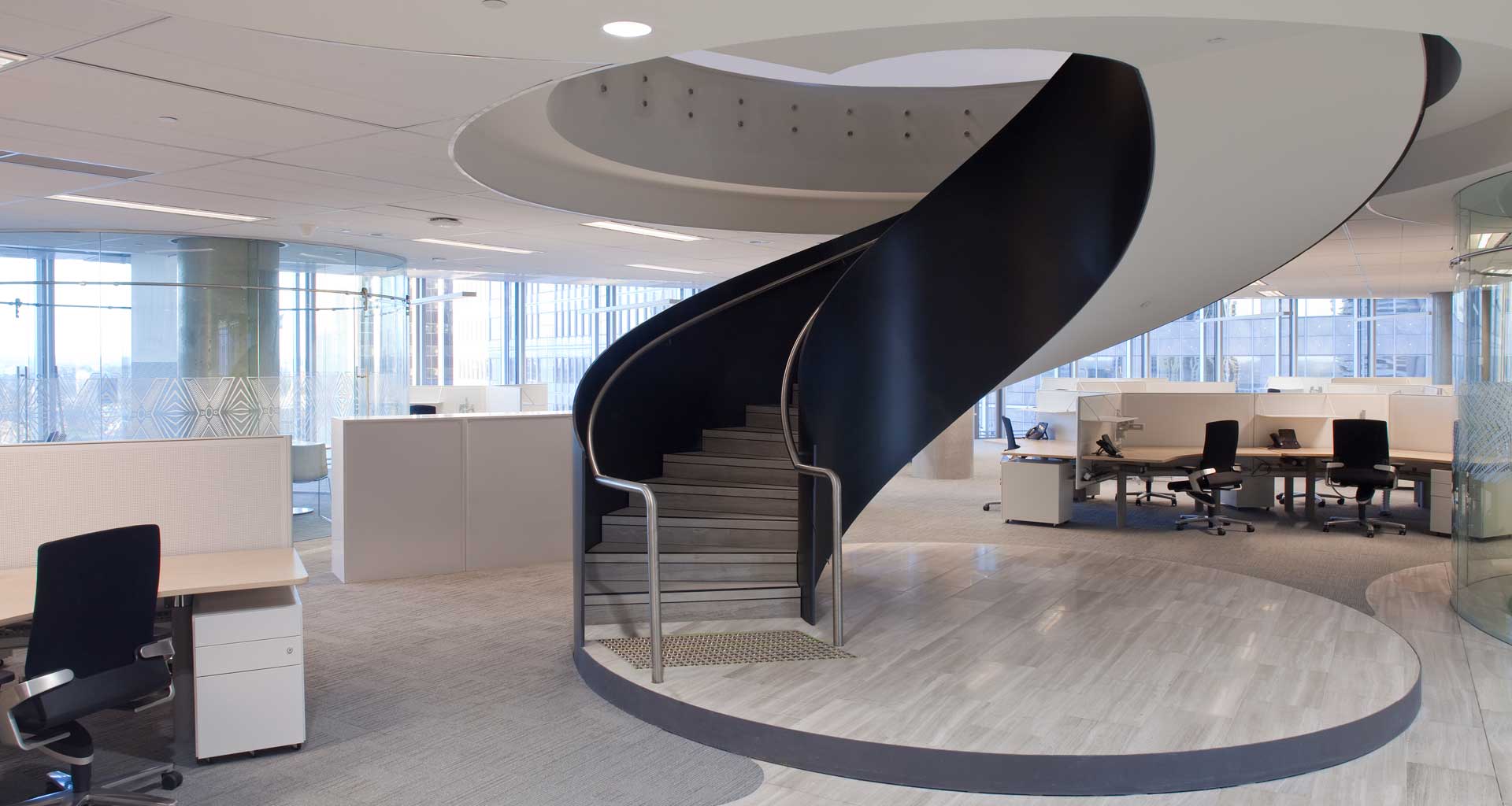
Structural analysis was central to the design of a two-storey spiral stair (pictured above) for the Oil Search offices in Sydney, New South Wales, Australia, delivered with Charles Heath Industries. Finite element modelling confirmed the behaviour of the stair utilising the thin steel plate balustrades as beams providing stiffness. Torsional restraint was achieved by welding the treads and risers between the balustrades and carefully detailing the connections to the existing concrete structure.
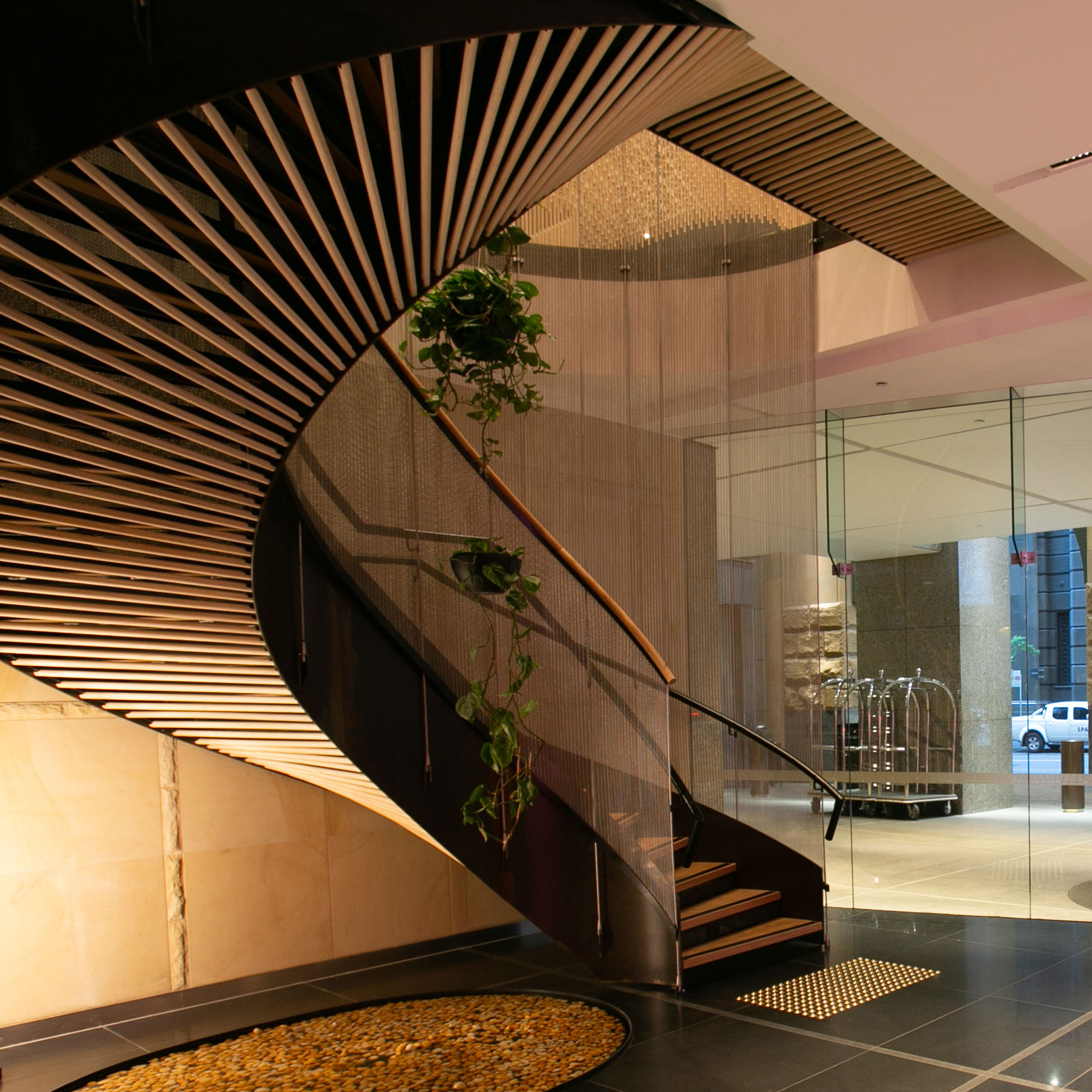
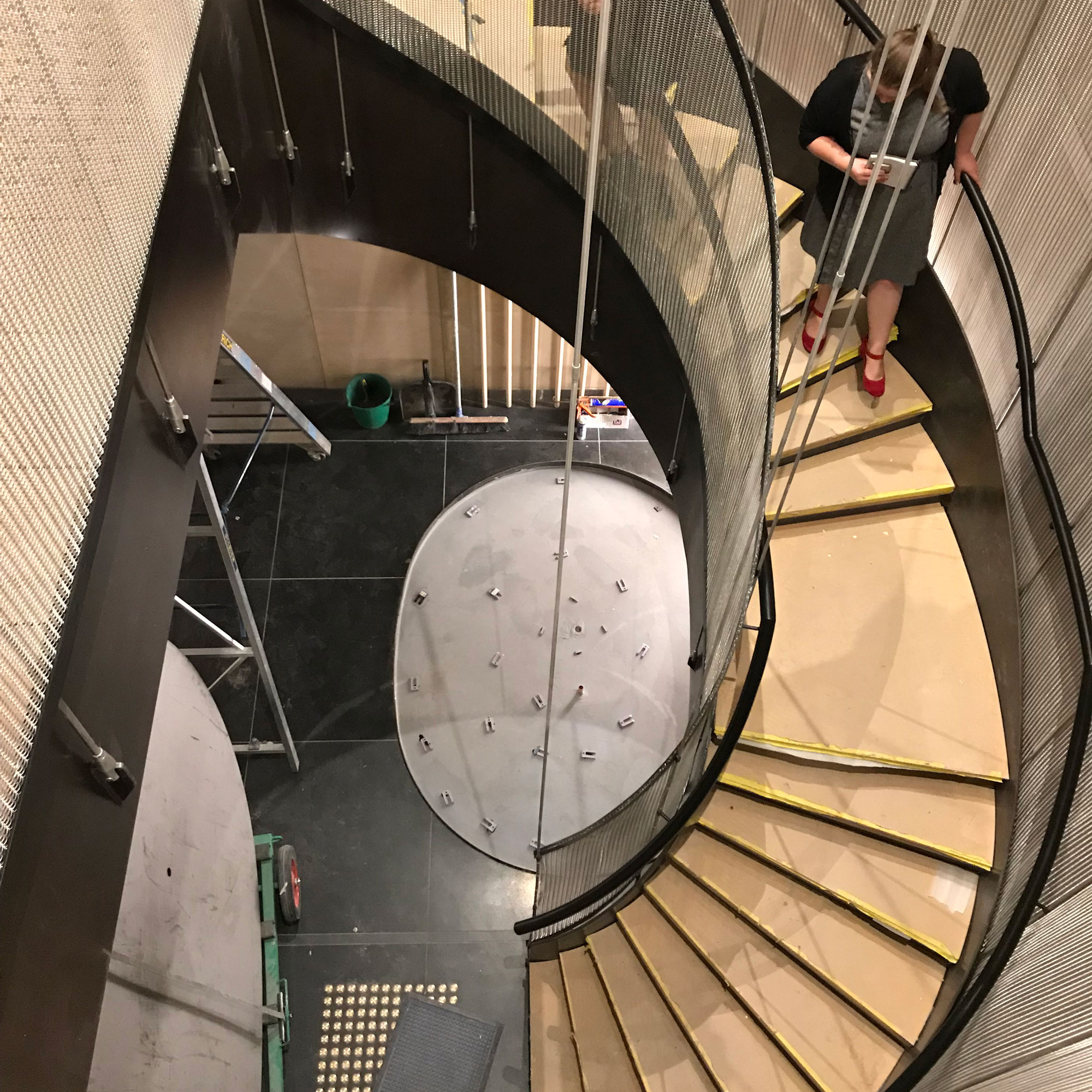
In the commercial refurbishment of The Portico at No. 1 Martin Place by Adriano Pupilli Architecture in Sydney, a new spiral stair (pictured above and below) forms the public entry to a mezzanine level. The stair is the primary structural intervention within the fit-out, guiding visitors into the semi-public front-of-house space. To achieve the light steel plate stringer profile, the stairs is partially hung using vertical cables.
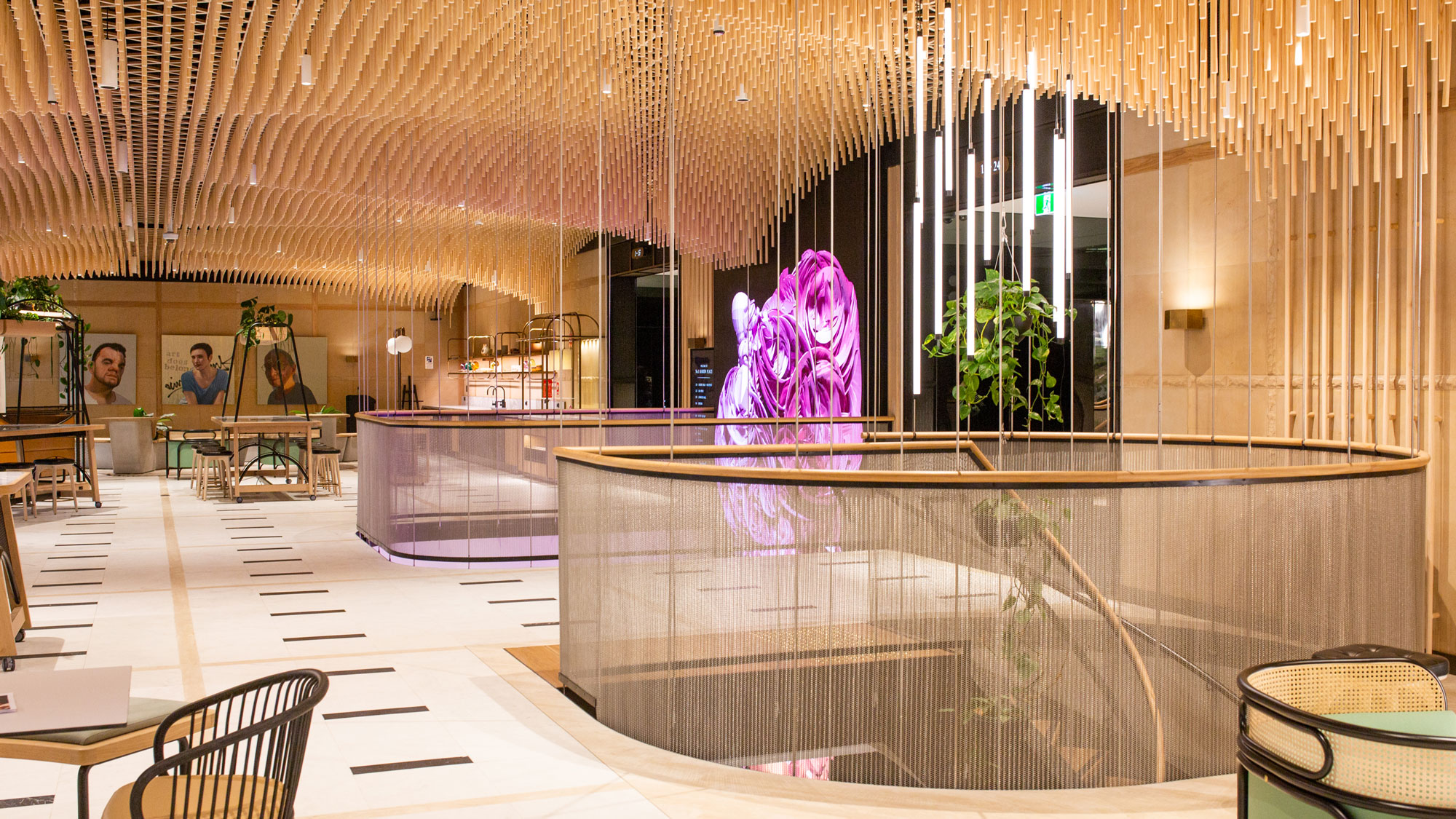
A feature of the stairs is the balustrade around the stair penetration. Using a ‘performance-based design’ an acceptable lateral displacement at handrail level defined the maximum ‘catenary sag’ in the design of the vertical cables, achieving the thin circular timber balustrade required by the architect.
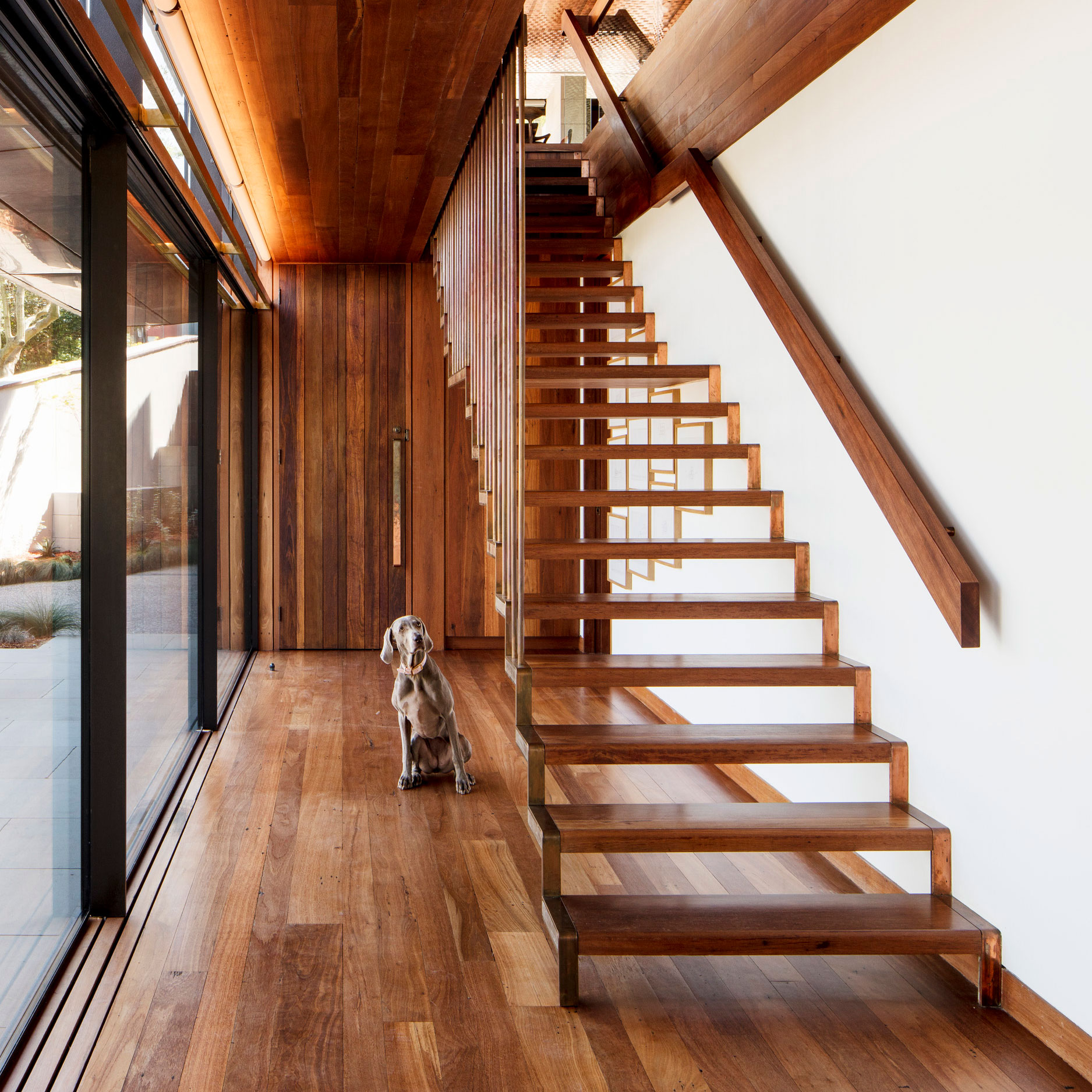
In Point Piper, New South Wales, Australia, a house designed by Collins and Turner (pictured above) features a staircase formed from folded copper plate stringers. The external stringer is suspended using steel cables concealed within copper tubes anchored to the slab above to minimise deflection (copper has only half the stiffness of steel). The cables also replace the need for a traditional balustrade and handrail. Steel plates reinforce each tread beneath the timber finish, allowing the stair to maintain its sculptural appearance while carrying the required loads. The internal profiled stringer is supported by fixings to the internal wall.
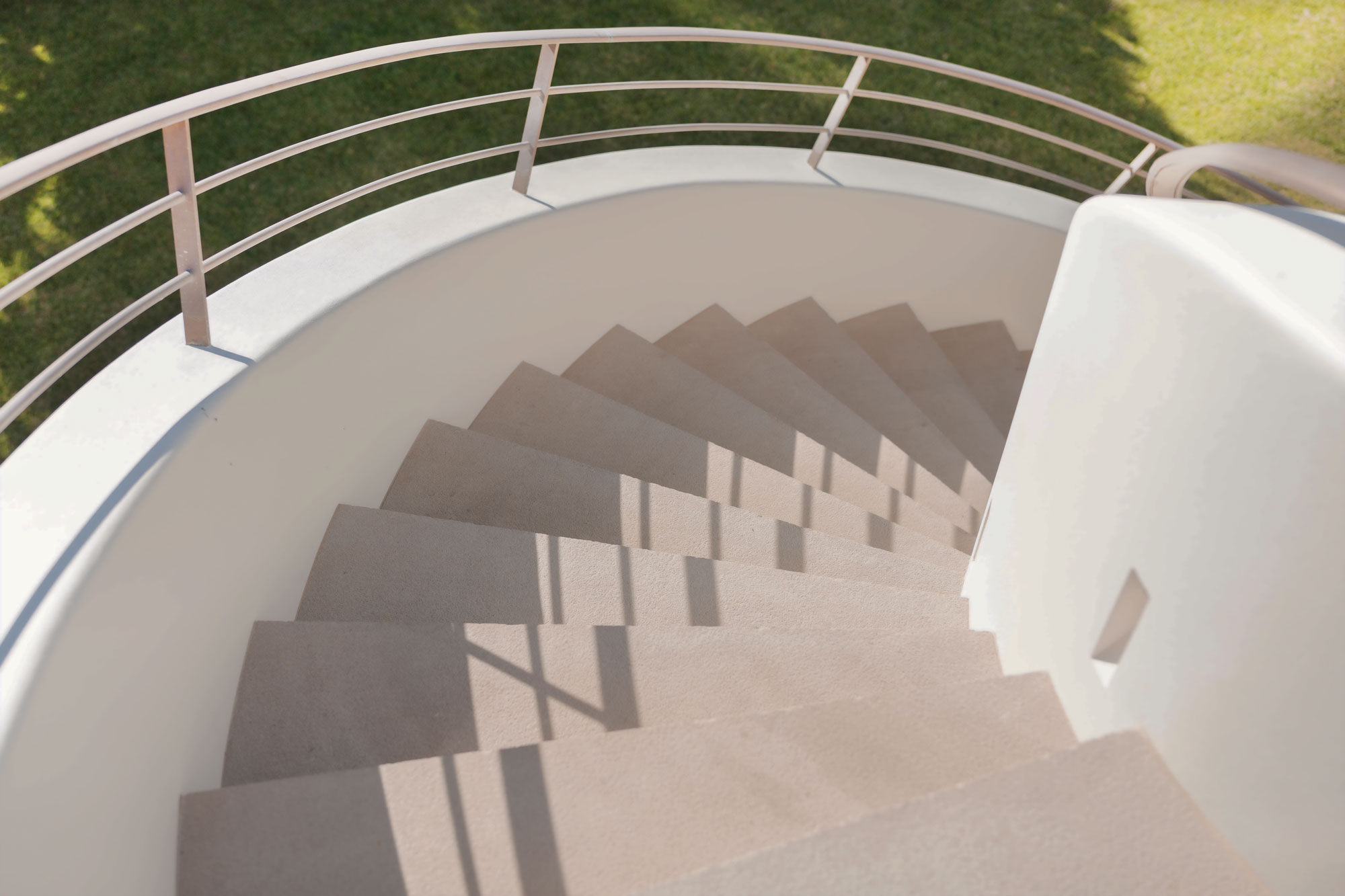
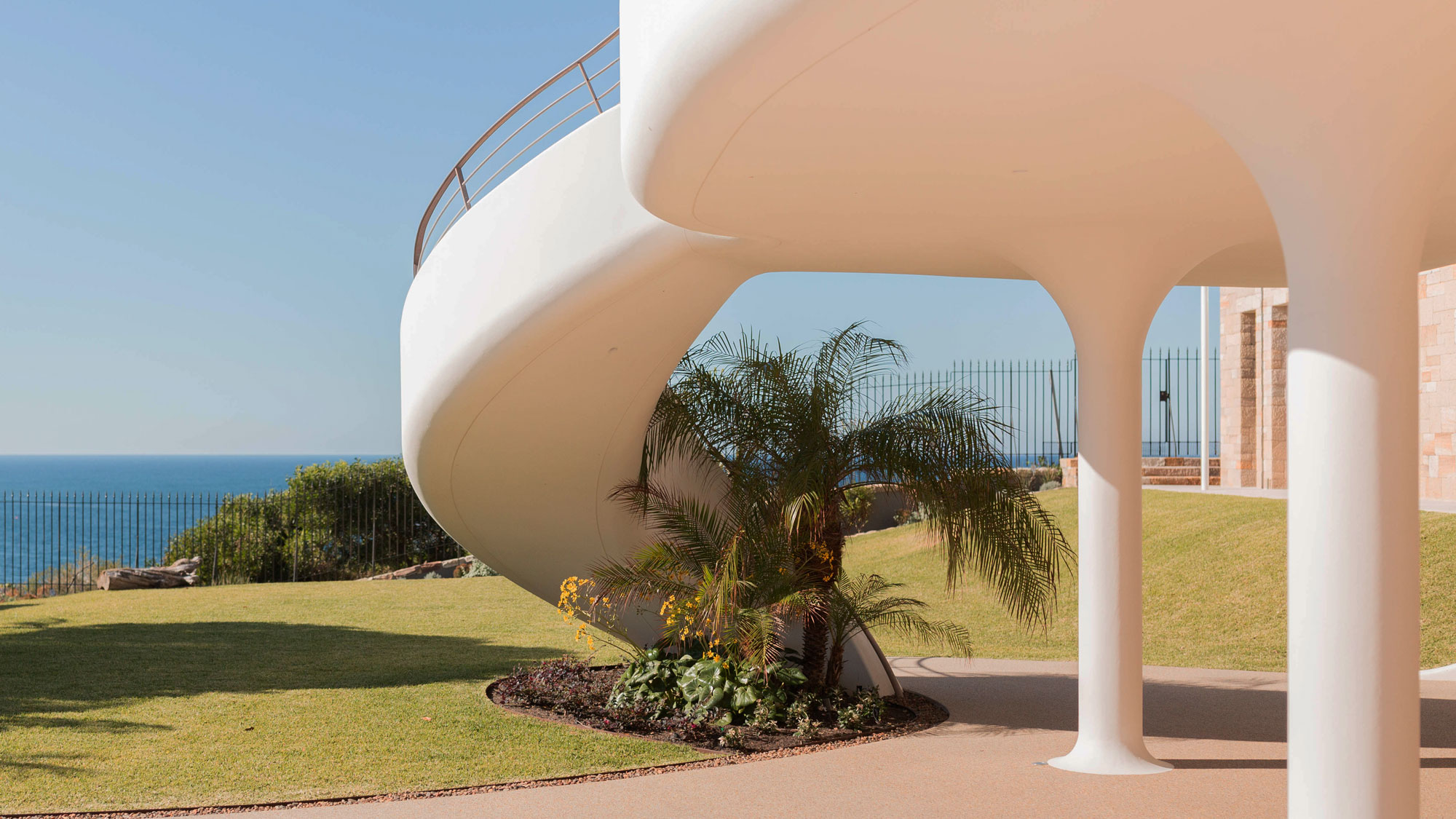
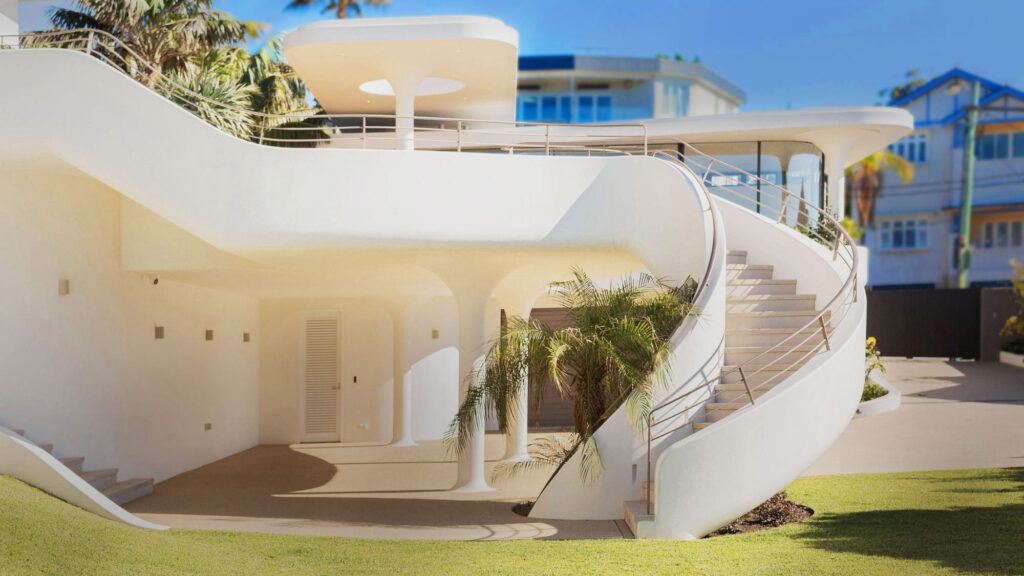
The external feature stair by the Cave Urban team on this creative home extension project (pictured above) presented a series of delightfully complex engineering challenges. To achieve the desired curved forms, and minimal maintenance in an external coastal setting, reinforced concrete was employed for the stairs. The spiral stair, with its unique U-shaped cross-section, was designed to span without intermediate supports. The project demanded well executed reinforcement detailing, together with tight site management in reinforcement placement concrete formwork installation to achieve the sculptural form.
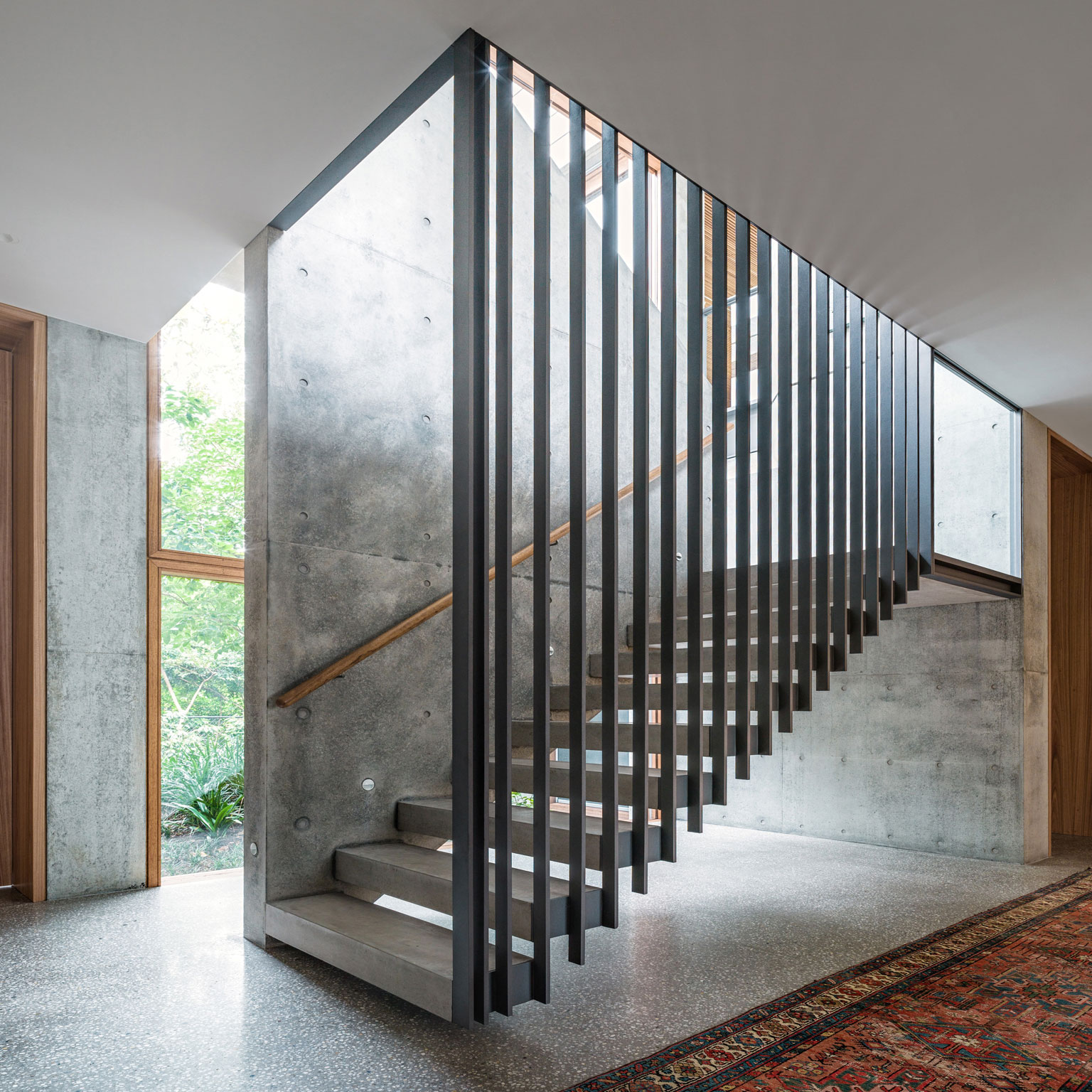
The central stair at Treetops House (pictured above) is a defining feature of the project and a key part of the home’s spatial experience. Formed in off-form concrete, the stair appears to cantilever effortlessly within the double-height space, creating a strong sculptural element while maintaining a sense of lightness. Working closely with Tobias Partners, the design required careful structural planning to achieve the clean geometry of the triangular central blade wall with only three points of support. The wall supports the cast-in-situ concrete treads, cantilevering from both sides of the wall. Integrated with the broader concrete structure of the house, including the off-form walls, concrete roof and polished floors, the stair expresses the material’s strength and precision while remaining an elegant focal point within the home.